Solo cruise cabins: meeting companions at sea after 50
Lesezeit: 12 Minuten
Solo cruise cabins have transformed from cramped afterthoughts into proper staterooms designed for single travellers, yet many over-50s still pay a punishing single supplement, sometimes 80-100% of the double occupancy rate. The good news is that cruise lines now compete for solo business with dedicated cabins, no-supplement voyages and social programmes specifically for unaccompanied guests, making it easier than ever to explore the Norwegian fjords or the Mediterranean without a travel partner and without being financially penalised.
If you're considering a cruise as a single person after 50, you're joining a growing movement. According to Cruise Lines International Association data from 2023, solo travellers now represent 18% of all cruise bookings, with the over-50 demographic accounting for the largest share of that segment. The question isn't whether to sail alone, it's how to choose the right voyage and make genuine connections once you're aboard.
Understanding solo cruise cabins and single supplements
Most cruise ships price cabins based on double occupancy. When you book alone, you often pay a single supplement, an additional charge that can double the base fare. However, several lines now offer studio cabins designed specifically for solo travellers, priced without supplements. Norwegian Cruise Line pioneered these on their Breakaway-class ships in 2010, with inside studios measuring around 100 square feet, complete with keycard access to a private Studio Lounge for solo guests only.
Cunard's Queen Mary 2 offers single-occupancy balcony staterooms on transatlantic crossings, typically priced at 125-150% of the per-person double rate rather than the full 200%. P&O Cruises, sailing from Southampton, has single cabins on Iona and Arvia that sleep one person in a proper bed rather than forcing you into a twin cabin designed for two, with rates starting around £899 for a seven-night Mediterranean voyage departing from the UK.
Fred Olsen Cruise Lines, popular with British over-50s, allocates a number of cabins on each sailing with reduced or waived single supplements. Their 2024 Norway cruise programme includes sailings from Liverpool and Dover with supplements as low as 10% on inside cabins, though these sell quickly and require booking at least six months ahead.
Meeting fellow solo travellers before you board
Many cruise lines now facilitate connections between solo passengers before departure. Royal Caribbean's Solo Traveller Facebook groups, organised by sailing date and ship, let you introduce yourself and arrange to meet for dinner or shore excursions weeks before embarkation. Saga Cruises, catering exclusively to over-50s from the UK, hosts pre-cruise gatherings at hotels in Portsmouth or Dover the evening before departure, giving solo travellers a chance to meet over drinks without the first-night formality.
If you've booked through a specialist agency like Solos Holidays or Friendship Travel, you'll often receive a passenger list with contact details for other single travellers on your voyage. This isn't standard practice with mainstream lines, but asking your travel agent about solo passenger meet-ups can sometimes yield an introduction or two. Just as avoiding common profile photo mistakes helps you make better first impressions online, a friendly email or message before the cruise can smooth those initial onboard introductions.
Onboard social spaces designed for solo cruise cabins guests
Norwegian's Studio Lounges are exclusive to solo cabin passengers, offering complimentary coffee, pastries and evening wine service in a space where striking up conversation feels natural rather than forced. These lounges host informal mixers on embarkation day and periodic meet-ups throughout the voyage, stewarded by a dedicated solo traveller concierge who remembers names and makes introductions.
Cunard's Grills Lounge on Queen Mary 2 attracts a mature, conversation-focused crowd, many travelling alone. It's a quieter alternative to the main bars, with comfortable seating, a curated whisky selection and a clientele more likely to discuss the previous evening's lecture than the next port's shopping. Holland America Line similarly offers the Explorations Café, a library-style space where solo guests often gather for coffee and the crossword, creating an easy environment for low-pressure conversation.
Princess Cruises runs a Travellers Programme with hosted get-togethers, shore excursions and dining arrangements for solo passengers. The Meet and Mingle sessions on sea days draw 20-30 unaccompanied guests, usually in the Piazza or a quiet lounge, where a crew member makes introductions and suggests shared dinner reservations or excursion groups for upcoming ports.
Dining strategies for meeting companions on a cruise after 50
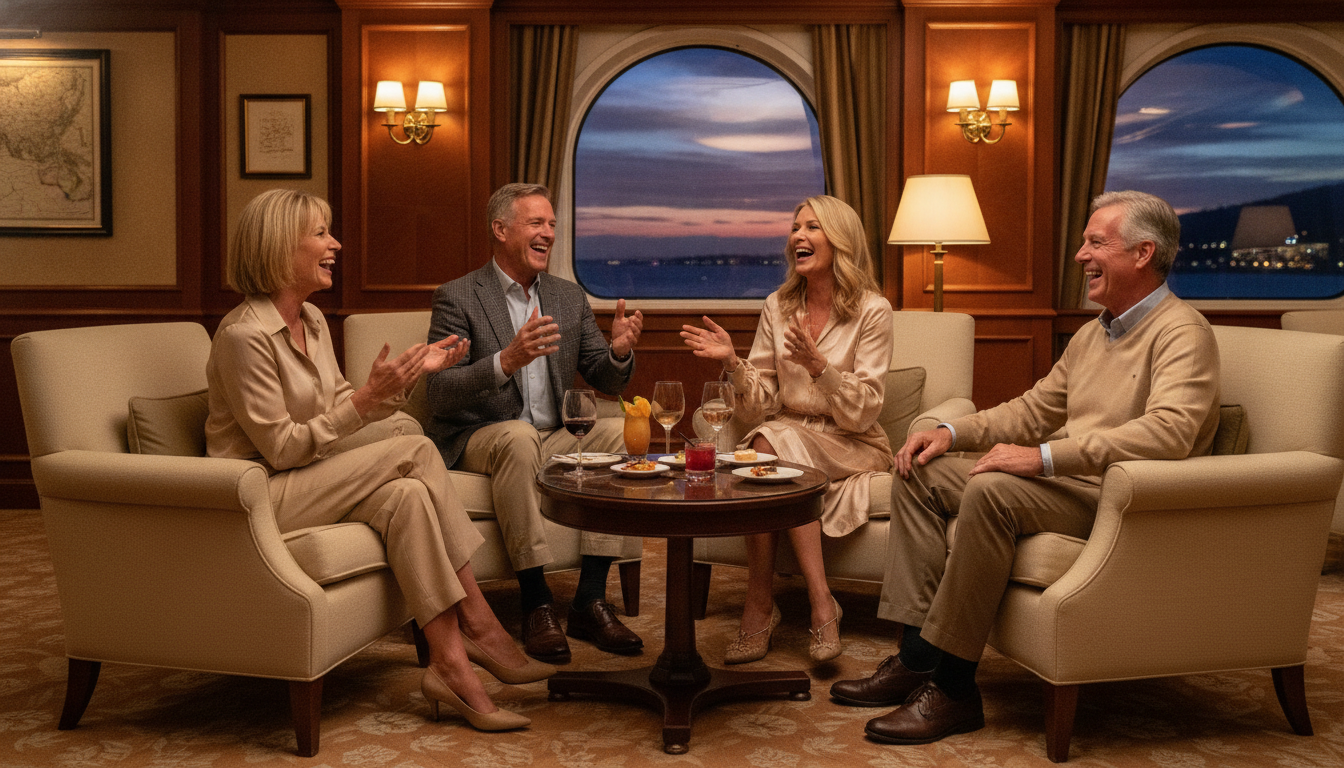
Traditional assigned seating in the main dining room remains the single best opportunity to form connections aboard a cruise ship. Request a table for six or eight when booking, and you'll dine with the same group each evening, giving friendships time to develop. On P&O's Britannia, solo passengers requesting communal tables are seated with other singles or couples open to sharing, typically in the second seating around 8pm.
Speciality restaurants offer a more intimate setting but usually require reservations for two or more. If you've met someone during the day, suggesting dinner at the Italian restaurant or steakhouse that evening provides a natural next step. Many solo travellers report better luck at lunch in the buffet, where communal high-tops and open seating make it simple to ask "mind if I join you?" without the commitment of a full evening meal.
Fred Olsen's smaller ships, carrying 800-1,300 passengers, make it easier to recognise familiar faces across multiple meals. Their single-seating dining at 7pm means you're not locked into one table but can move between groups, giving you flexibility to deepen connections that click while politely excusing yourself from those that don't.
Shore excursions and group activities that foster connection
Booking group shore excursions rather than private tours immediately puts you alongside other passengers with shared interests. A guided walking tour of Dubrovnik's Old Town or a wine tasting in Bordeaux creates natural conversation starters and gives you hours together off the ship. Cruise Critic's Roll Calls, online forums organised by specific sailing, often coordinate unofficial meet-ups in port, allowing solo passengers to explore together without paying for an organised tour.
Onboard enrichment programmes attract engaged, curious passengers, the type more likely to welcome conversation. Cunard's Insights lectures, often delivered by authors, historians or former diplomats, are followed by book signings or informal Q&A sessions in the library, creating built-in discussion topics. Viking Ocean Cruises offers destination-focused talks before each port, drawing an older, intellectually curious demographic that tends to include many solo travellers.
Fitness classes, particularly those like yoga or Pilates that run daily, build familiarity with the same participants throughout the week. Several solo cruisers report meeting regular walking companions through early morning stretch classes or the promenade deck walking groups that form organically on longer voyages.
Realistic expectations about romance and companionship at sea
Cruise ships are not floating speed-dating events, and expecting to meet a romantic partner can set you up for disappointment. That said, shared experiences, beautiful destinations and the absence of everyday distractions create an environment where connections, both platonic and romantic, develop more easily than they might at home. If you're open to possibility without fixating on outcome, a cruise offers genuine potential. The same principles that help with settling first-date nerves at 50 apply here: focus on enjoying the experience rather than forcing a particular result.
For those specifically seeking a holiday companion over 50, cruise travel offers an extended tryout period. Seven days aboard ship with someone reveals far more about compatibility than a few dinners at home ever could, making it an unusually effective filter for future travel partnerships or deeper relationships.
Which cruise lines and itineraries attract single travellers over 50
Saga Cruises exclusively serves the over-50 market, with around 30% of passengers travelling solo according to their 2023 passenger survey. Their ships carry just 999 guests maximum, creating an intimate atmosphere where you'll recognise the same faces in lectures, at dinner and on excursions. Saga's Spirit of Adventure, launched in 2020, includes 111 single cabins with reduced or no supplements on select sailings, particularly during shoulder season departures from Dover or Portsmouth.
Fred Olsen attracts a mature British demographic comfortable with solo travel, offering destination-focused itineraries like their 14-night Norway and Iceland voyages from Liverpool. Their fleet of smaller ships, the largest carrying just 1,350 passengers, means you're not lost in a crowd of thousands. Single supplements on their Balmoral and Braemar ships can be as low as 5-15% during repositioning cruises or off-peak periods.
Cunard's transatlantic crossings between Southampton and New York draw a disproportionate number of solo travellers who value the voyage as much as the destination. A seven-night crossing offers ample time to attend lectures, join bridge tournaments and strike up acquaintances without the rushed pace of port-intensive Mediterranean cruises. Single balcony cabins on Queen Mary 2 start around £1,899 for an eastbound crossing in September, with supplements typically 25-50% rather than the standard 100%.
Cruise lines offering dedicated solo programmes worth considering include Holland America, particularly their longer Panama Canal and Alaska sailings, and Celebrity Cruises, whose X-Class ships feature 12-14 inside solo cabins per vessel. Both lines attract an older, more affluent demographic than mass-market operators, with passengers more likely to engage in enrichment activities and conversation-based socialising.
Practical tips for making solo cruise cabins work
- Book early to secure solo cabins or reduced supplements, which are limited and sell out first on popular sailings
- Embark with an open posture: introduce yourself at the muster drill, say yes to shared excursions, attend solo passenger meet-ups even if you're naturally introverted
- Avoid the temptation to eat every meal in your cabin; the dining room and communal spaces are where connections happen
- Bring business cards or contact cards with your email and phone number to exchange with people you'd like to stay in touch with after the voyage
Consider shoulder-season sailings in April, May, September or October when solo supplements are often reduced and passenger demographics skew older and more experienced. A Baltic cruise in early September or a Mediterranean voyage in late April offers excellent weather, fewer families with children and better pricing than peak summer departures.
How solo cruise cabins fit into a broader social strategy after 50
A cruise shouldn't be your only avenue for meeting people, but it's an effective component of a varied social life. The same week you spend aboard ship, you might also attend a lecture series at home, join a walking group or pursue other structured activities that facilitate connection. If you're using platforms like MySugardaddy to meet companions who share your interest in travel, a cruise offers an ideal first extended trip together, testing compatibility in a structured, safe environment where you each have your own space to retreat to if needed.
The investment in a solo cabin, even with a supplement, often proves more valuable than the equivalent spend on a land-based holiday where you're isolated in a hotel room with limited opportunities for organic social interaction. Cruise ships create proximity and repetition, the two factors most likely to turn strangers into acquaintances and acquaintances into friends.
Common concerns about solo cruise cabins for first-timers
Will I feel awkward dining alone if I don't meet anyone?
Most cruise lines seat solo passengers together at communal tables unless you specifically request otherwise, so truly eating alone is rare. If you prefer solitude some evenings, the buffet or speciality venues offer tables for one without awkwardness, and many solo travellers report splitting their time between social dinners and quiet meals with a book.
Are solo cabins significantly smaller than standard cabins?
Yes, dedicated solo cabins are typically 30-40% smaller than standard inside cabins, ranging from 80-130 square feet. They include a proper bed, bathroom and storage but limited floor space. If you're spending most of your time exploring the ship and ports, the size trade-off for avoiding a supplement often makes sense.
How do I avoid feeling like the odd one out among couples?
Choose cruise lines and itineraries that attract solo travellers: expedition cruises, transatlantic crossings and lines like Saga or Fred Olsen that cater to the over-50 market. Participate in organised solo passenger activities early in the voyage to establish a social circle, making the rest of the cruise feel less couple-centric.
Is it safe to travel solo on a cruise ship as a woman over 50?
Cruise ships are among the safest holiday options for solo women, with 24-hour security, cabin key-card access and staff trained to monitor passenger welfare. Exercise the same sensible precautions you would anywhere: avoid excessive alcohol, don't share cabin numbers with strangers and stick to well-lit public areas after dark in port.
Can I share a cabin with another solo traveller to split costs?
Yes, several agencies including Cruise Nation and Iglu Cruises offer cabin-share matching services, pairing solo travellers of the same gender to share a twin cabin and split the cost. This eliminates the single supplement entirely but requires flexibility about roommates and a tolerance for shared space.
Making the most of your first solo voyage
Your first solo cruise will teach you more about your preferences than any amount of research. Some people discover they love the freedom of solo travel and book their next voyage before disembarking. Others realise they prefer travelling with a companion and use the cruise as motivation to find one. Both outcomes are valuable, and neither requires you to force friendships or romantic connections that don't develop naturally.
The key is choosing a cruise that aligns with your interests rather than simply selecting the cheapest option. A music-themed cruise on Holland America, a foodie voyage in the Mediterranean or an expedition to the Norwegian Arctic in summer attracts passengers who share your passions, making conversation effortless. Cunard's Literature Festival at Sea cruises, held several times annually, draw book lovers and create an instant community around author talks and reading groups.
Solo cruise cabins remove the financial penalty and practical barriers that once made cruising alone prohibitively expensive or awkward. Whether you're testing the waters of solo travel, actively seeking companions or simply want to see Alaska without waiting for someone else's schedule to align with yours, the options available to UK over-50s in 2024 are broader and better value than ever before. Book the voyage, pack an open mind and trust that the right connections will develop naturally over shared sunsets and port adventures.